About Tom Bowen
Thomas Ambrose Bowen (1916–1982) was an Australian therapist and the originator of what is now known as Bowen Therapy. Working from his practice in Geelong, he developed a distinctive hands-on approach using precise movements using fingers and thumbs, applied to key areas of the body. His work has since been developed and taught internationally and forms the foundation of modern Bowen Therapy practice.
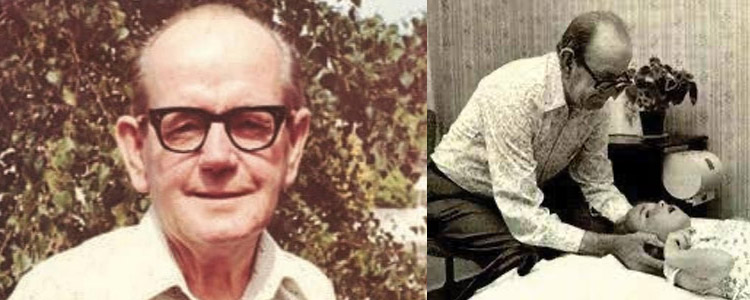
Early Life and Background
Tom Bowen was born in Australia in 1916. He did not undertake formal medical training; instead, he developed his skills through observation, practical experience, and a deep interest in how the body responds to physical stimulus. Over time, his reputation grew locally as people sought his help for a wide range of conditions.
Development of the Technique
During the 1950s through to the early 1980s, Bowen built a busy practice in Geelong. His work was characterised by a series of precise, rolling movements applied to specific points on the body, often with a short treatment duration.
This approach differed from many other hands-on therapies of the time. Rather than continuous manipulation, Bowen emphasised minimal intervention, precision, and the importance of allowing the body to integrate each stimulus. His work was widely regarded as effective by those who attended his clinic, leading to a strong word-of-mouth reputation.
Recognition and Documentation
Bowen did not run formal training courses, but a small group of practitioners later became known as "Tom’s Boys": Keith Davis, Kevin Neave, Nigel Love, Oswald Rentsch, Romney Smeeton, and Kevin Ryan. Their learning came through observation of Bowen's clinical work rather than through a formal syllabus.
As Bowen himself did not formally publish or systemise his work, much of what is taught today is based on these observations and subsequent development by trained practitioners and instructors.
Legacy
Since Bowen's passing in 1982, the technique has continued to evolve and is now practised worldwide as a complementary therapy. Training programmes and professional associations have been established to support standards of practice, education, and ongoing professional development.
Organisations such as the BTPA play an important role in maintaining these standards and supporting practitioners in delivering Bowen Therapy safely and effectively.
Key Principles of Bowen's Approach
- Cross-fibre, precise movements applied to specific points on the body
- The ability to detect imbalance in muscle tension
- A holistic perspective, considering the whole person rather than isolated symptoms
- A non-invasive and respectful approach to treatment
Tom Bowen's work remains influential, though it is important to recognise that he did not formally document his methods. Modern Bowen Therapy is therefore based on recorded observations and subsequent interpretation, teaching, and development by others.